2026-10-11 · David Chen
When Termites Swarm in Alpharetta Georgia
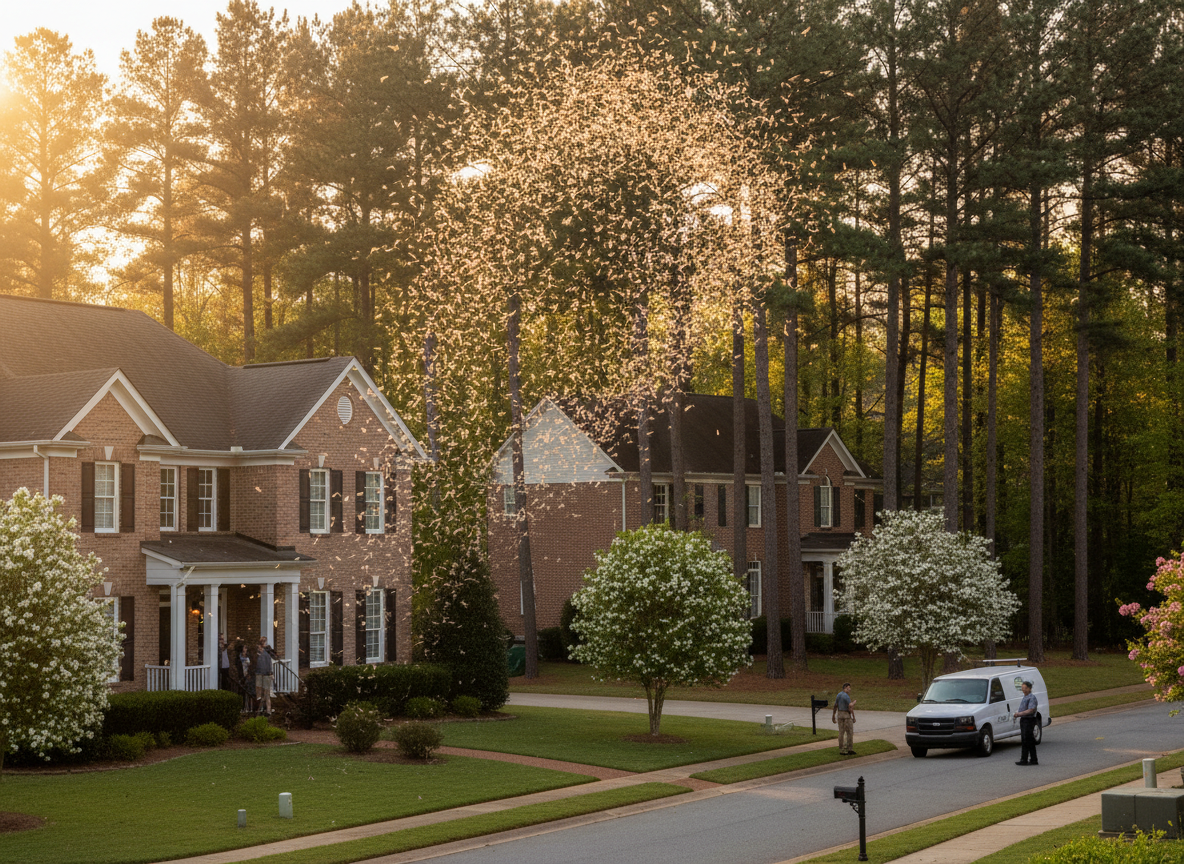
Termite swarms in Alpharetta, Georgia, typically occur from late winter through early summer, specifically from late February through June, though variations can happen due to local weather patterns. These swarms are a natural part of the termite reproductive cycle, where winged reproductive termites, known as alates or swarmers, emerge from established colonies to mate and form new ones. For homeowners in areas like Downtown Alpharetta, Avalon, or Windward, recognizing these swarmers is crucial, as their presence almost always signals an active termite infestation within or very near the structure. The humid subtropical climate with hot summers and mild winters in Fulton County creates an ideal environment for termites to thrive year-round, making swarm season an especially high-risk period for properties.
Understanding the Alpharetta Termite Swarm Season
While the general window for termite swarms in Alpharetta is broad, specific species have slightly different peak times. Subterranean termites, the most common and destructive type in our region, often swarm in the spring, usually after a rain event and when temperatures are mild, typically between 70-90 degrees Fahrenheit. These are the termites you're most likely to encounter in neighborhoods like Milton and Crabapple, where older homes with wooden structures provide ample opportunity for infestation. Drywood termites, though less prevalent than subterranean termites in our area, can swarm later in the summer and into the fall. The key takeaway for any Alpharetta homeowner is that if you see winged insects resembling flying ants, especially indoors, during these months, it's highly probable you have a termite issue that requires immediate attention. Ignoring these signs can lead to significant structural damage over time.
Identifying Termite Swarmers vs. Flying Ants
Distinguishing between termite swarmers and flying ants is vital for proper pest identification and treatment. Many Alpharetta residents, particularly those near Big Creek Park or the Alpharetta Greenway, might mistake swarmers for ants, delaying necessary action. Here's how to tell them apart:
- Ants have bent or "elbowed" antennae, a constricted waist, and two sets of wings that are different in size.
- Termites have straight antennae, a broad waist, and two sets of wings that are equal in size and shape. These wings are often shed shortly after swarming, so finding discarded wings, particularly on windowsills or near light sources, is a strong indicator of a termite swarm. The presence of these discarded wings, even without seeing the swarmers themselves, is a definitive sign of an active colony. For more detailed information on identifying signs, you can refer to our article on [/blog/inspecting-your-alpharetta-property-for-termite-signs].
Why Termites Swarm Indoors and What It Means
Finding termite swarmers inside your home is a clear and urgent sign of an active infestation. Unlike outdoor swarms, which might originate from a nearby tree stump or woodpile, indoor swarmers indicate that a mature termite colony has established itself within your property's structure. This could be in your walls, crawl spaces, or even wooden furniture. Homes in older parts of Alpharetta, such as near Alpharetta City Hall, or even newer developments in Windward and Avalon, are susceptible. The swarmers are attracted to light, so you'll often find them around windows, light fixtures, or doors. If you discover swarmers inside, it means the colony is well-established and has reached a size where it's ready to expand, signifying a critical need for professional /services/termite-treatment.
Factors Influencing Swarm Activity in Fulton County
Several environmental factors specific to Fulton County and the Alpharetta area influence when and how termites swarm. The region's humid subtropical climate plays a significant role, providing the consistent moisture termites need to survive and thrive. After heavy spring rains, common in our area, the ground becomes saturated, prompting subterranean termites to emerge. Soil conditions, especially in areas with clay-rich soil, can also affect colony development and swarming patterns. Additionally, the abundance of mature trees and landscaping in neighborhoods like North Point and Haynes Bridge provides ample food sources and nesting sites for colonies to grow large enough to produce swarmers. Understanding these local conditions helps us anticipate and prepare for termite activity.
Post-Swarm Risks and What to Do Next
Even if you only see the aftermath of a swarm—discarded wings or dead swarmers—the risk to your home remains high. The swarmers themselves are not the ones causing the structural damage; that's the job of the worker termites within the colony. The swarm is merely the visible symptom of a much larger, hidden problem. If you've observed a swarm, it's imperative to act quickly. Do not disturb the swarmers or try to treat them yourself with over-the-counter sprays, as this can scatter them and make professional treatment more challenging. Instead, contact a local termite control expert. We are based right here at 11729 Amber Park Dr Ste 160, Alpharetta, GA 30009, and can provide a thorough /services/termite-inspection to identify the extent of the infestation and recommend an effective treatment plan, such as /services/subterranean-termite-treatment or /services/termit-baiting-systems, to protect your Alpharetta home.