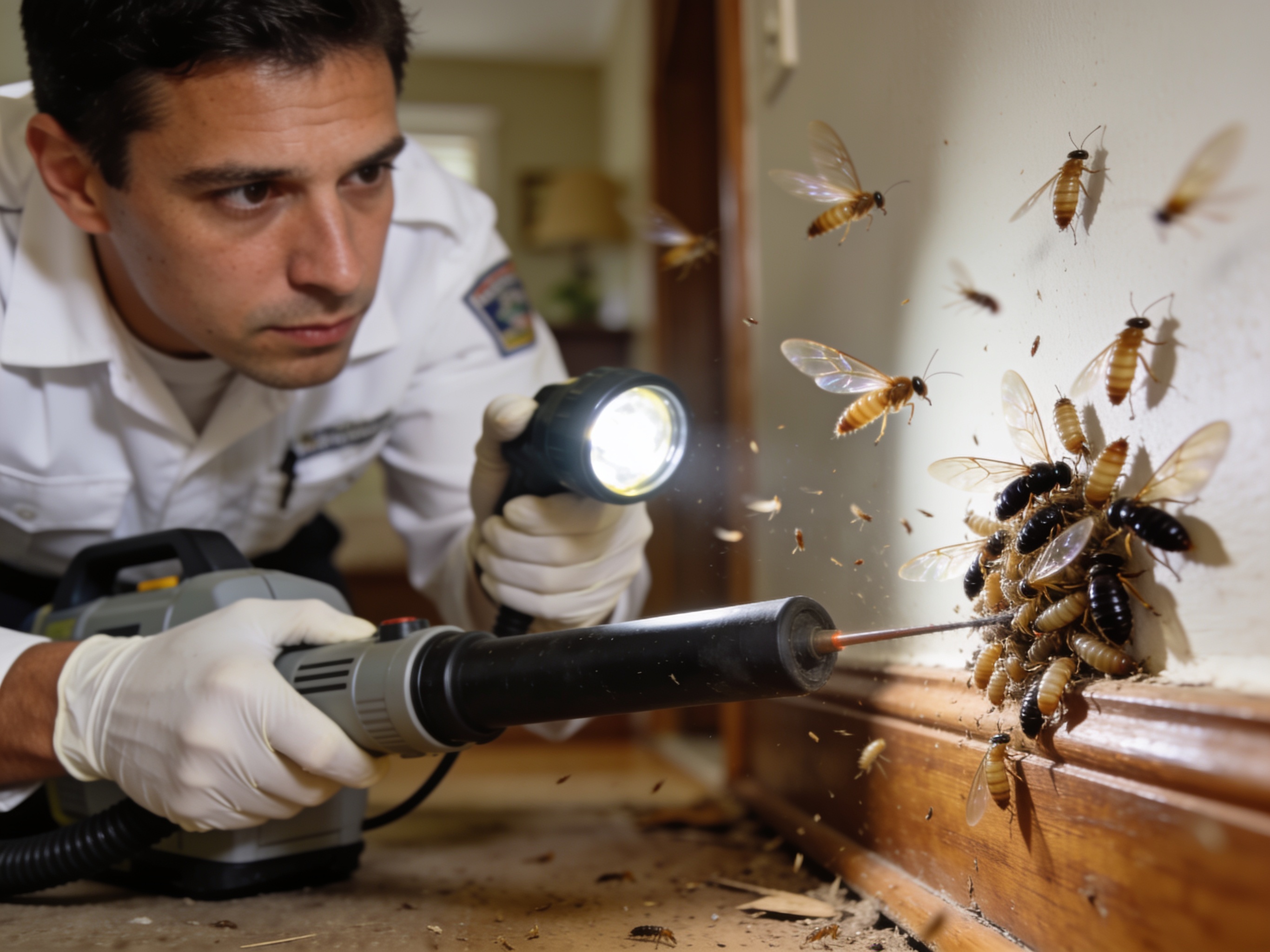
Discovering termite swarmers, often mistaken for flying ants, is a definitive sign of an active termite colony, and it's a call for immediate action, especially in a humid subtropical climate like Alpharetta's. These winged reproductive termites emerge from mature colonies, typically in the spring after a rain, seeking new locations to establish satellite nests. In Fulton County, with its older housing stock in areas like Downtown Alpharetta and more modern developments in Windward and Avalon, the risk is persistent. Swarmers are often attracted to light, so you might find them near windows, doors, or even around fixtures in basements or attics. Their presence means a colony has been established for at least three to five years, silently feeding on your home's wooden structures. Ignoring them allows the colony to grow, increasing the potential for significant structural damage.
The key to effective termite control once swarmers appear is a thorough inspection to locate the colony's entry points and assess the extent of the infestation. Our process goes beyond just treating the visible swarmers; we target the entire colony. Given Alpharetta's blend of older homes and newer constructions, we're adept at identifying common entry points, from foundation cracks in historic properties near Alpharetta City Hall to moisture-prone areas around decks and landscaping in Crabapple. We consider the specific conditions of your property, including soil type, drainage, and proximity to wood sources like Big Creek Park. Our goal is to eliminate the current threat and implement preventative measures to protect your home from future invasions, ensuring the long-term integrity of your investment.
Alpharetta's climate, characterized by hot summers and mild winters, provides an ideal environment for termites to thrive year-round, making proactive and responsive treatment crucial. Subterranean termites, the most common type in this region, build their colonies in the soil and construct mud tubes to access food sources. Drywood termites, while less common, can also be a concern, especially in older wooden structures. When swarmers are spotted, it's not just about spraying the visible insects; it's about understanding the species, their habits, and the unique vulnerabilities of your property. We use advanced techniques and products designed to create a protective barrier around your home, eliminating existing colonies and preventing new ones from taking hold, providing peace of mind to homeowners from North Point to Haynes Bridge.
Technician insight
In Alpharetta, the thing that catches most people out with termite swarmers is mistaking them for flying ants, especially during spring after a good rain. Because our homes, from older ones in Crabapple to newer builds in Avalon, are often surrounded by mature trees and lush landscaping, the subterranean termites have plenty of food sources. Homeowners often don't realize the colony has been active for years until the swarmers appear, by which point significant damage might already be hidden in the walls or crawl spaces.
Swarmer Scare in Windward Home
A homeowner in Windward called us in a panic after finding dozens of winged insects around their living room window. We quickly identified them as subterranean termite swarmers. Our inspection revealed a well-established colony entering through a small crack in the foundation near a leaky outdoor faucet. We applied a comprehensive liquid barrier treatment around the home's perimeter, eliminating the colony and preventing further structural damage.
Termite Swarmers in the House Services We Offer
✓Subterranean Termite Swarmer Identification
Expert identification of subterranean termite swarmers, distinguishing them from flying ants to confirm an active infestation originating from soil colonies.
✓Drywood Termite Swarmer Confirmation
Specialized inspection to confirm the presence of drywood termite swarmers, which can indicate an infestation within wooden structures without soil contact.
✓Targeted Colony Elimination
Precise application of termiticides to eliminate the entire termite colony, focusing on the source rather than just surface-level swarmers.
✓Post-Swarming Damage Assessment
Thorough evaluation of structural damage caused by the established termite colony after swarmer activity, providing insights for potential repairs.
✓Preventative Barrier Installation
Installation of a protective liquid barrier around your home's foundation to deter future termite entry and re-infestation after swarming events.
✓Ongoing Monitoring & Protection
Scheduled follow-up inspections and monitoring services to ensure long-term protection against new termite colonies in Alpharetta's environment.
Termite Swarmers in the House Cost in Alpharetta, GA
| Service | Typical Range | What Affects It |
|---|---|---|
| Swarmer Inspection & Identification | $75–$150 | Cost may vary based on property size and travel distance within Fulton County. |
| Localized Swarmer Treatment (Small Area) | $300–$800 | For minor, isolated swarmer activity; does not include full colony treatment. |
| Full Colony Elimination (Subterranean) | $800–$2,500+ | Price depends on home size, infestation severity, and chosen treatment method (liquid barrier vs. bait system). |
| Full Colony Elimination (Drywood) | $1,500–$4,000+ | Varies significantly based on the extent of wood infestation and treatment complexity (e.g., fumigation vs. localized). |
Ranges are typical for Alpharetta, GA and confirmed with an exact written quote before any work starts.
How it works
- 1
Initial Inspection & Swarmer Identification
Our process begins with a detailed inspection of your property, both interior and exterior, to confirm the presence of termite swarmers and differentiate them from other flying insects. We'll examine common entry points around your foundation, crawl spaces, attics, and areas with moisture buildup, especially prevalent in Alpharetta's humid climate.
- 2
Colony Location & Assessment
Once swarmers are identified, we focus on locating the active termite colony. This involves searching for mud tubes, wood damage, and other signs of termite activity. We assess the species of termite and the extent of the infestation to tailor an effective treatment plan specific to your Alpharetta home.
- 3
Targeted Treatment Application
Based on our findings, we apply targeted treatments designed to eliminate the entire colony. This may include liquid termiticides applied to the soil around your foundation, bait systems, or direct wood treatments, depending on the termite species and location of the infestation. Our methods are chosen for maximum efficacy and minimal disruption.
- 4
Post-Treatment Follow-up & Prevention
After the initial treatment, we conduct follow-up visits to ensure the colony has been eradicated and to monitor for any new activity. We also provide recommendations for preventative measures, such as improving drainage, sealing foundation cracks, and removing wood-to-soil contact, crucial for long-term protection in areas like Milton and Johns Creek.
Pricing
Pricing for termite swarmer treatment varies based on the severity of the infestation, the size of your property, and the chosen treatment methods.